
Well the Patrick Mannelly Longsnapper Award has now gone big time with Barstool Sports writing an article about it. They are calling it the most prestigious college football award out there. Must be true! LOL You can read more about the award right here. Look for me joining the boys on a podcast coming out soon.
Patrick Mannelly Longsnapper Award
If you have been following me on twitter, @patrickmannelly, you have seen me promoting a big announcement. Well it is finally here! Together with Chris Rubio of @thechrisrubio and Kevin Gold of @longsnapcom, we present to you The Patrick Mannelly Award presented to the top collegiate Long Snapper! For more information, please go to PatrickMannellyAward.com You can also follow us @MannellyAward on both twitter and Instagram. It is a honor to have my name attached to this award but this is about the young men who have been putting in hours of work to be the best Long Snapper they can be. Keep up the hard work and DemandPerfection, Expect Excellence.
Football season is right around the corner
Break time is over. It’s time to stop being at home playing video games with elo boost services from ElitistGaming. Now is time to amp up your workouts. Before you know it, you will be snapping a thousand balls during practice. Not only was now the time when my final snapping prep started to really pick up but my workouts as well. If your body is not strong enough for the workload that camp brings, your snapping will suffer. I figured that out early in my NFL career. During the first couple of training camps when I was the only longsnapper in camp my hamstrings game me problems. I was not ready for the snapping workload. But I learned quickly. I started tailoring my workout … Read More
Scouting report for 3 potential 2017 NFL Longsnappers
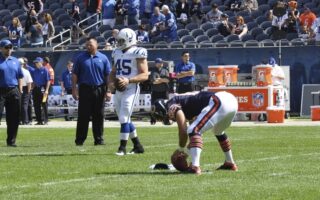
I sat down with my friend Jack Silverstein of www.Windycitygridiron.com to talk about the three NFL Longsnapper prospects that I worked with this offseason. All three have serious pro potential but read the link below to get more info on each one. http://www.windycitygridiron.com/2017/4/27/15456688/nfl-draft-long-snapping-scouting-report-bears-patrick-mannelly-scott-daly-colin-holba-cole-mazza
The Original Longsnappers
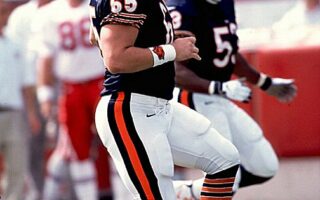
I have been working with a few snappers that will be entering the 2017 NFL Draft this offseason. And when talking to them about some of the former longsnappers I looked up to, I was shocked that they had no idea who they were. This got me thinking that these guys need to be recognized. I was drafted into the NFL in 1998 and that was right when the long snapping transition was starting. (Thank god) At the time, more teams were starting to carry pure longsnappers. At that point, teams still had guys who were tight ends, linebackers or backup O linemen handling snapping duties. These guys listed below helped make the longsnapping position become what it is today. Mike Bartrum … Read More
Offseason Long Snapping Drills
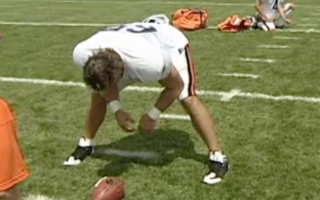
Football offseason has begun for most. It is that time of year when you ask, how much do I snap, do I take a break? Well, that’s up to you. If you need a mental break, take it. If you want to snap more then go for it but have FUN doing it. This is the time of year you don’t have any coaches around so you can do what you want to do. Two drills I did over and over are the Goal Post Drill and the Distance Snap Drill. But like I said have fun. Make a game of it. But like I said have fun. Make a game of it. For example, if you are doing the goal post drill put a piece … Read More
The Coldest Bears Games I Played
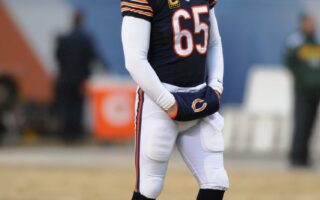
The Bears are set to take on the Packers this Sunday Dec. 18th and the forecast calls for a high of 1. This got me thinking about the coldest games that I played. These are in order of what I “felt” were the coldest. 1. Packers @ Bears Dec. 23, 2007 16 Degrees Wind Chill -18 Wind 22+ MPH This game was insanely cold to me because of the wind. It was listed as 22 MPH but it was gusting much higher during the game. By the way we won 35-7 2. Bears @ Vikings Dec. 20, 2010 at University of Minnesota TCF Stadium. 23 Degrees Wind Chill 9 Wind 17+. Yes, the temperature was a balmy 23 but the high winds and poor sideline … Read More
Leaping the Longsnapper
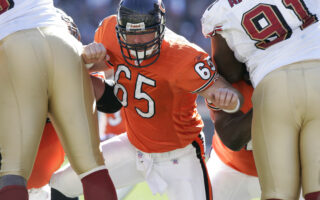
The New England Patriots executed the perfect “leaping” of a longsnapper in their game against the Ravens. Many people on twitter have asked should that be allowed? I say yes. It is a football play and can be stopped by the kicking team if they are paying attention. Here are three simple ways to combat the leaping of the longsnapper: First, the simplest way for the field goal team to stop if from happening is to be aware. If you see a guy that is a threat to leap just tell the defender we know you are jumping. There were numerous times in my career that the guards or me would simply say “alert for the leaper”. What player wants to jump over the line when … Read More
Longsnapper Elbow Pain
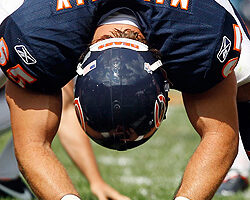
It’s about that time of year in the football season when my elbow would start flaring up with pain. The pain would be on the inside of my right elbow. I would snap through it and not know how to fix it. Anti-inflammatories and ice were used to try to stop the pain but that did not help. My brother in law ,Dr. Tommy John, who is a chiropractor and runs a performance and healing center in San Diego told me that I needed to get the muscles around my elbow stronger. He was right! He told me to make sure my forearms were as strong as I could get them. He gave me a few exercises to do. 1.Forearm Curls- I would use a … Read More
Technique Flaw
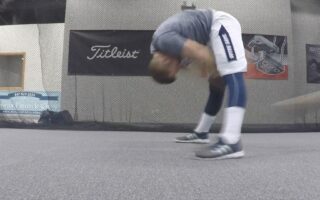
In my last blog post, I discussed why longsnappers struggle with the transition from College to the Pros and I mentioned a technique flaw in protection. Let me explain further. Many young snappers are working on snapping as fast as they can and with that they are locking out their knees in the follow thru. This will help you at a young age when you are not strong enough to generate power with your snap. But as you get older and want to move on from college to the pros this will cause an issue. I understand the thought of using your entire body to generate speed but in the Pros you have to “get out” after your snap and protect. When you lock your … Read More
- Page 1 of 2
- 1
- 2